

"We cannot solve a problem with the same level of consciousness that created it." — Albert Einstein
Blog
Blog
Insights, reads and tools to understand, deepen and explore these themes in a living way.
Insights
The essentials
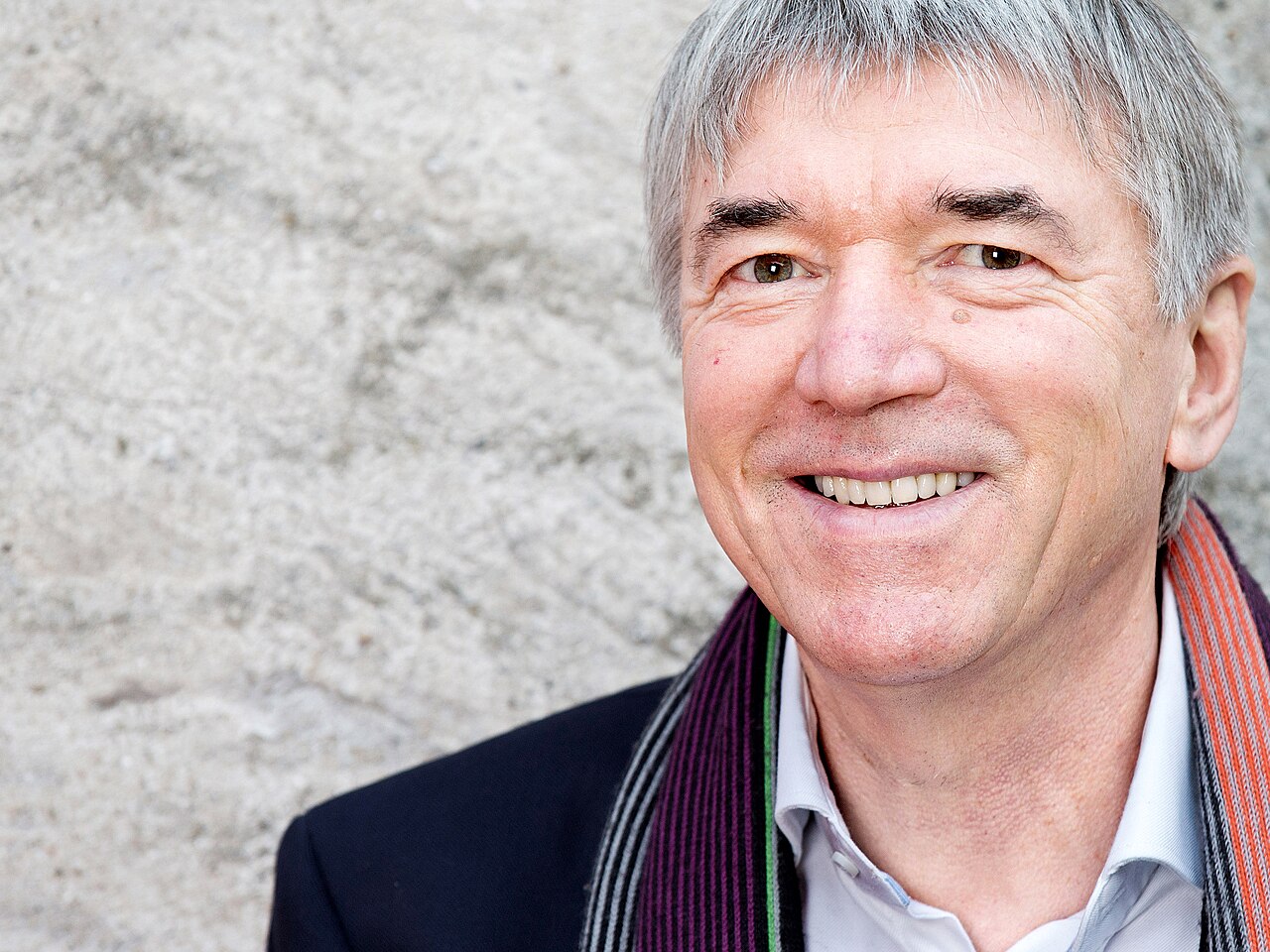
Who is Franz Ruppert? Professor of psychology in Munich, since the 2000s he has developed one of the most innovative approaches in psychotraumatology: IoPT — Identity-oriented Psychotrauma Therapy. Praised in 30 countries, still little known in the French-speaking world.
The key points of his method
- ✦ Trauma does not disappear — it hides behind a false identity built to survive
- ✦ Behind the pain, a living identity waits to exist — intact, buried, but there
- ✦ IoPT works through the constellation of a sentence of intention — not through the mind, through resonance
- ✦ The body knows what the analytical brain cannot yet see
Why is it effective in therapy?
Because it reaches what talking therapies do not always touch. It makes visible — concretely, physically — what was playing out in the shadows. And it starts from desire rather than symptom.
"This is not reasoning. It is resonance."
To go further
Franz Ruppert is professor of psychology in Munich. He has developed one of the most innovative therapeutic approaches of the last twenty years: IoPT — Identity-oriented Psychotrauma Therapy.
His starting point is simple — and radical. Most of our suffering does not come from what we think.
Ruppert starts from a clinical observation: when a human being goes through a traumatic event — violence, loss, abandonment, a threat to life — the psyche fragments in order to survive.
He develops what Ruppert calls a survival self — a substitute identity, built to get through the pain. Effective at the time. But which, over time, takes up all the space.
The problem is not that we suffer. It is that we no longer know who suffers — and who, behind, is waiting to truly exist.
The living identity — the one from before the wound, the one that carries our real desires, our vital energy — is there. Buried. But alive.
IoPT uses a simple and powerful technique: the constellation of a sentence of intention. You formulate in a few words what you want to work on.
Each word of that sentence is then explored — through the body, through resonance, through what emerges spontaneously when you truly pause on it.
This is not reasoning. It is resonance. The information rises — often where you least expect it. Buried memories. Repetitive patterns suddenly illuminated. Long-blocked emotions finally finding an outlet.
The analytical brain observes. The body knows. — L.J
The essentials
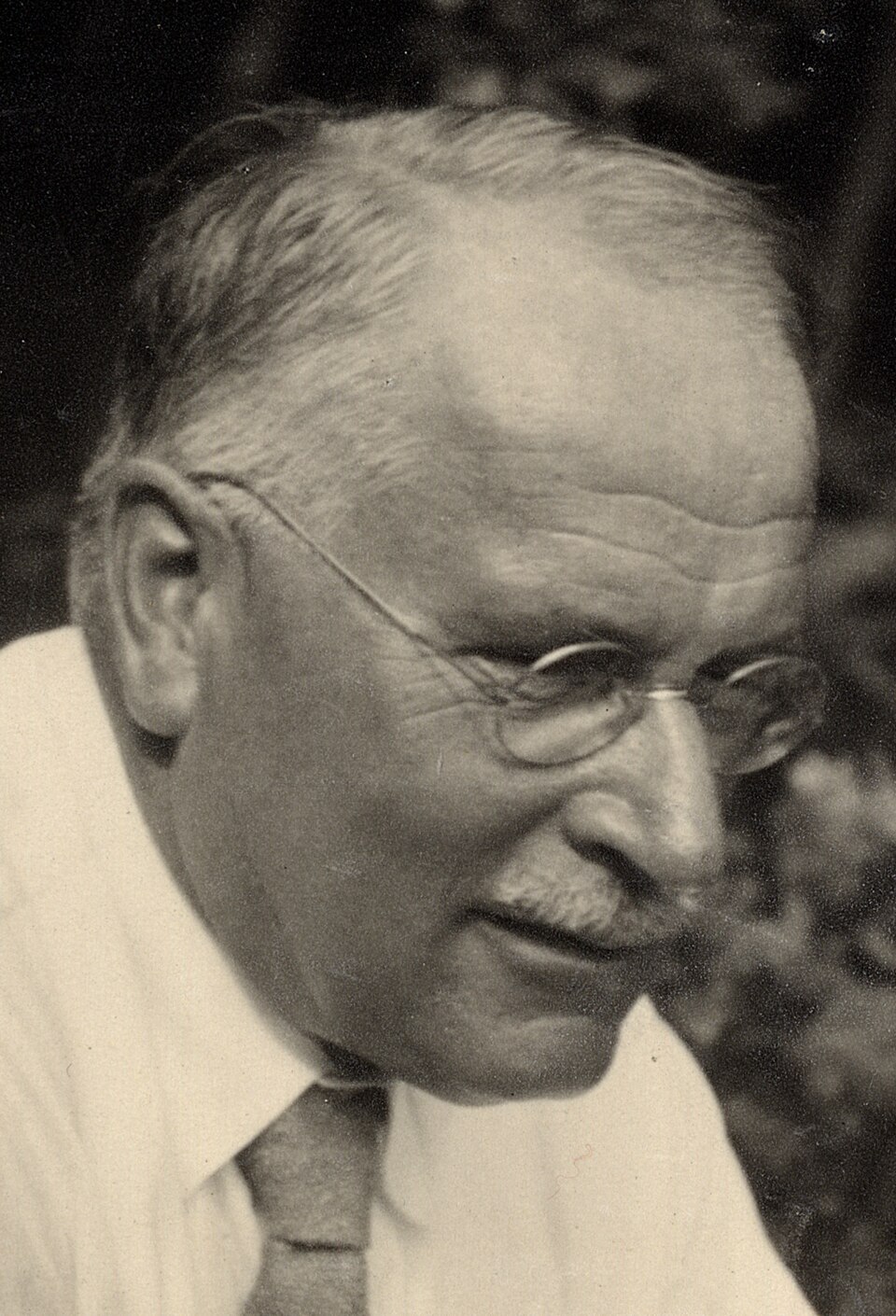
Who is Carl Gustav Jung? Swiss psychiatrist (1875–1961), father of depth psychology. Probably the most quoted psychologist today — on social media, in personal-development podcasts and in psychotherapy practices.
The key points of his thinking
- ✦ The persona: the mask we build for the world — useful, but dangerous when we forget we wear it
- ✦ The shadow: what we repress and which returns despite us — in the form of conflicts, repetitions, inner unease
- ✦ The anima/animus: the feminine part of man, the masculine part of woman — which secretly governs our love relationships
- ✦ The Self: the inner compass, the deep centre of who we truly are
- ✦ Individuation: becoming, gradually, who we are — not what we were asked to be
Why is it effective in therapy?
Because Jung does not try to suppress what hurts — he seeks to understand what it means. Every symptom, every dream, every repetition is information. Jungian therapy transforms what was endured into something that can be understood — and integrated.
"What does not come to consciousness returns to us as fate." — Jung
To go further
The Swiss psychiatrist and psychoanalyst (1875–1961) is the father of "depth psychology". He is probably the most quoted psychologist on social media, in personal-development podcasts and in therapy practices around the world.
He named the mask we all wear. Jung called it persona — from the Latin: the theatre mask — the character we build for the outside world. This mask is useful. It allows us to function in society. But when we confuse it with ourselves — when we forget we are wearing it — we end up living a life that does not truly belong to us.
He took our shadow side seriously. Behind the persona hides what Jung called the shadow — everything we repress, deny, project onto others. For Jung, ignoring one's shadow does not make it disappear. It returns — in the form of repetitions, unexplained conflicts, chronic inner unease.
He highlighted the feminine part of man — and the masculine part of woman. Every man carries an unconscious feminine part — the anima. Every woman, a masculine part — the animus. These inner figures deeply influence our love relationships.
He named what we are all searching for — the Self. At the centre of the whole psyche, Jung places the Self — not to be confused with the everyday ego. The Self manifests where the mind gives way: a dream that leaves a lasting mark, a decision taken without knowing why, an encounter that changes everything.
Jung is the only great psychologist to have recognised that the human psyche has an irreducible spiritual dimension. That the search for meaning, the need for transcendence, the experience of the sacred are not illusions to dissolve — but real psychic forces.
He brought to light a concept that sums up a whole life: individuation — the process by which one gradually becomes who one truly is.
What he leaves us: an invitation. Not to be happy at all costs. But to ask ourselves, honestly: Who am I really — beneath the mask I built to please, to perform, to survive? It is the most courageous question there is. And the most liberating.
The essentials
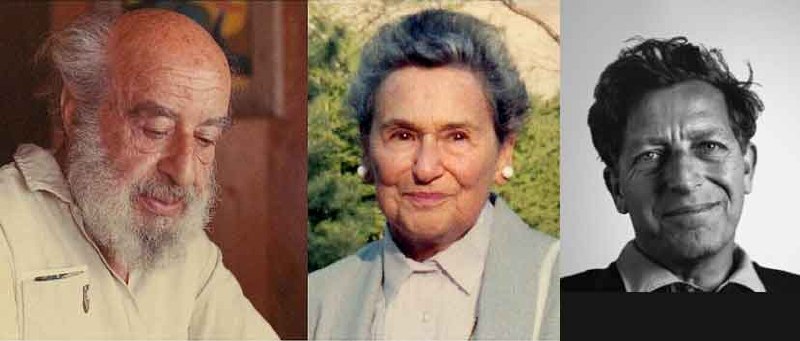
Who is Fritz Perls? A German doctor and psychoanalyst exiled to the United States in the 1950s. Trained in psychoanalysis, he moved beyond it — not to reject it, but to go further. He founded Gestalt therapy, practised today all over the world.
The key points of his method
- ✦ What is happening now matters more than what can be analysed from the past
- ✦ The body does not lie: voice, posture, gesture, emotion are all information
- ✦ Suffering is born from a rupture of contact — with oneself, with others
- ✦ The goal is not healing. It is regaining contact with what we truly feel
Why is it effective in therapy?
Because it short-circuits the mind. We do not talk about our life — we feel it in the session. Which changes something concrete, quickly, in everyday life.
"Lose your mind and come to your senses." — Fritz Perls
To go further
Gestalt therapy was born in the 1950s, driven by Fritz Perls, a German psychoanalyst exiled to the United States. It was built in rupture with classical psychoanalysis — not to deny it, but to go further.
Its central idea fits in one sentence: What is happening here, now, in this moment, is richer in information than anything one could analyse from the past.
Where Freud systematically went back to childhood to explain the present, Perls asked a different question: what is happening in you, now, while you speak? Your body tenses. Your voice changes. You avoid my gaze. You smile when you talk about something painful.
These micro-signals do not lie. Gestalt's working hypothesis is that the body, the voice, the gesture, the emotion that arises — all of it carries information that words alone cannot deliver.
The key word in Gestalt is not "healing". It is the art of contact. Contact with oneself — one's real emotions, one's true needs, one's authentic limits. Contact with the other — not facade contact, performative contact, but the real meeting between two people.
Gestalt observes that suffering is almost always born of a rupture of contact — with oneself, with others, with life. We cut ourselves off from something essential in order to survive. To please. Not to be a burden.
Fritz Perls had a formula his students never forgot: "Lose your mind and come to your senses." It is not an invitation to the irrational. It is an invitation to wholeness — to inhabit one's existence with everything one is, not only with what one thinks. — L.J
Reads & Videos

The essentials
What is this book about? How individual trauma reverberates throughout society. Our institutions — political, judicial, educational, medical — are made of people. Of traumatised people. Who reproduce, often without knowing it, what they themselves endured.
The victim-perpetrator dynamic does not stop at the door of childhood. It runs through families, companies, governments. Ruppert asks an uncomfortable question: are we victims? Yes, often. Are we also perpetrators? Sometimes — without even seeing it.
Why read it during a therapy? Because it places the work on oneself in a broader — and more political — perspective. Understanding how one's own trauma feeds collective dynamics is both humbling and liberating. This book does not blame. It illuminates.
Éd. Le Courrier du Livre — €18
To go further
Let us look around us. Conflicts that never end. Institutions that crush as much as they protect. Relationships that wound — again and again, along the same patterns.
We are our society. Our institutions do not fall from the sky. They are made of people. Of traumatised people. Who reproduce, often without knowing it, what they themselves endured.
Violence calls for violence. Humiliation calls for domination. Abandonment calls for indifference.
What Ruppert names the victim-perpetrator dynamic does not stop at the door of our childhood. It runs through our families, our companies, our governments.
The disturbing question: Are we victims? Yes, often. Are we also perpetrators? Sometimes — without even seeing it.
Ruppert does not seek to blame. He seeks to illuminate. Because what we do not see in ourselves ends up being replayed — in our life, our relationships, society as a whole.
A simple, and radical, conviction: a healthier society begins with individuals who accept to face their own trauma. Not out of guilt — out of lucidity.
"How to live in a traumatising and traumatised society?" Franz Ruppert — Éd. Le Courrier du Livre — €18 — L.J
The essentials
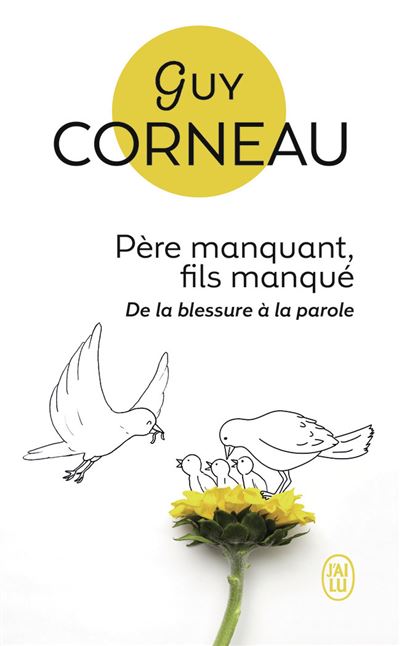
What is it about? The silence of fathers — and what it leaves in the body and psyche of sons. Not only when the father is physically absent. Also when he is there — but distant, silent, emotionally unavailable.
This lack produces a fragility of internal structure that translates into difficulties identifying one's needs, making choices, asserting oneself. Behind the seducer, the eternal adolescent, the hero or the good boy — often the same wound.
Why read it during a therapy? Because it names what many men were never able to say. And because understanding the origin of a wound is already beginning to stop being its prisoner. This book works like a mirror — often uncomfortable, always useful.
Éd. J'ai Lu — paperback — €7.20
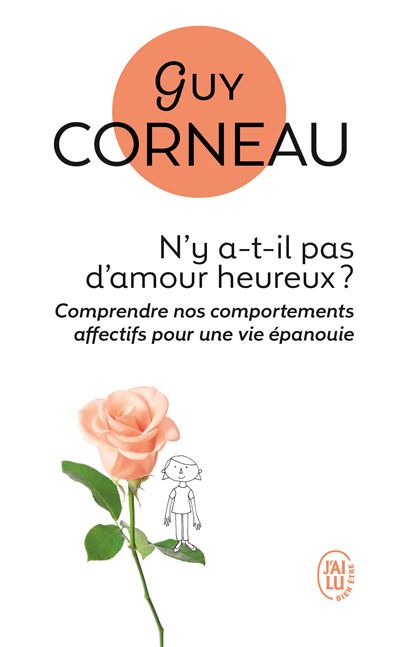
The essentials
What is it about? How our childhood wounds secretly govern our love relationships. A father's silence can produce a woman who loves too much — or an excess of maternal care; men who are afraid to love.
To love the other, one must first make peace with oneself. Becoming aware of one's wounds. Working through them. Only then can one truly receive — and give.
Why read it during a therapy? Because it sheds light on what plays out between two people — and what in fact belongs to each separately. It is particularly useful during periods of couple conflict or the repetition of love patterns.
Éd. J'ai Lu — paperback — €8.00
Tools

The essentials
What is a talking group? A space of encounter — between men or between women — where one shares one's experience without judgement. An ancient practice, rooted in human traditions, renewed by contemporary psychology. Neither a course, nor classical group therapy.
What actually happens there
- ✦ For men: rediscovering a space where emotion is possible — anger, vulnerability, isolation — without having to perform
- ✦ For women: laying down what has been lived without having to justify it — one's relationship to the body, to motherhood, to boundaries, to lineage
- ✦ For all: expressing what it is to be a man/woman, partner/single, parent/non-parent — seeing one's deep relational patterns replay and observing them differently
Why is it useful alongside a therapy?
Because what repeats in life also repeats in the group — and can finally be seen and made conscious with people ready to talk about it. The group offers three experiences that individual therapy does not always provide: being heard without being corrected, recognising oneself through the other, and experiencing a more direct and more authentic relationship — and creating deep, lasting, warm and supportive friendships.
"Psychic change happens not only in intimacy with oneself — but also in the encounter with the other."
To go further
Talking groups for men and for women offer a unique relational space, at the crossroads of connection, listening and inner transformation. Inspired by ancient traditions and renewed by contemporary approaches, they allow one to revisit one's relational patterns in a safe framework, complementary to individual therapeutic work.
An ancient practice returned to the heart of the contemporary. Talking groups are not a recent invention. They belong to a long human tradition: that of circles where one shares one's experience, where one listens and where experience is passed on. With modernity and the individualisation of ways of life, these spaces have gradually disappeared, leaving more room for isolated experiences.
Men's groups: taming speech and vulnerability. In men's groups, the challenge is often to rediscover a space where emotional expression is possible without judgement. Many men explore themes there such as difficulty asserting oneself, performance pressure, anger or the feeling of isolation.
Women's groups: bonds, transmission and one's own place. Women's groups frequently address other dimensions: the relationship to the body, to motherhood, to the feminine lineage, or the difficulty of setting boundaries in relationships.
A tool complementary to therapy. For those in individual therapy, these groups are a precious extension. They allow certain deep relational patterns to replay in a safe framework: the relationship to the mother, the father, the children or authority.
A transformative relational experience. Beyond words, the group offers three essential experiences: being heard without being corrected, recognising oneself through the other, and experiencing a different relationship — more direct and more authentic.
A living space at the heart of psychic care. Talking groups do not replace individual therapy, but they extend its dynamic. They remind us of something essential: psychic change happens not only in intimacy, but also in the encounter with the other. — L.J